

Japanese knotweed · 3 min read
Japanese knotweed changes a lot through the year, which is why it is so often missed or confused with other plants. Use this season-by-season guide to check what you have, and if you are still unsure, send us a photo for a free identification.
Spring: red and purple shoots
New growth appears as red or purple shoots, a bit like asparagus spears, pushing up from the ground. Leaves start rolled up and dark red, then unfurl and turn green as the stems grow quickly.
Summer: dense green stands
- Hollow, bamboo-like stems with purple or red speckles
- Stems grow in a zig-zag pattern, with a leaf at each joint
- Shield or heart-shaped leaves with a flat base, arranged alternately along the stem
- Dense stands that can grow taller than an adult
Late summer to autumn: creamy white flowers
Clusters of small, creamy white flowers hang from the leaf joints towards the end of summer and into early autumn.
Winter: brown, hollow canes
Above-ground growth dies back to dry, brown, hollow canes that can stay standing through winter. The plant is not dead. The rhizome system underground is dormant and will regrow in spring.
Below ground: the rhizome
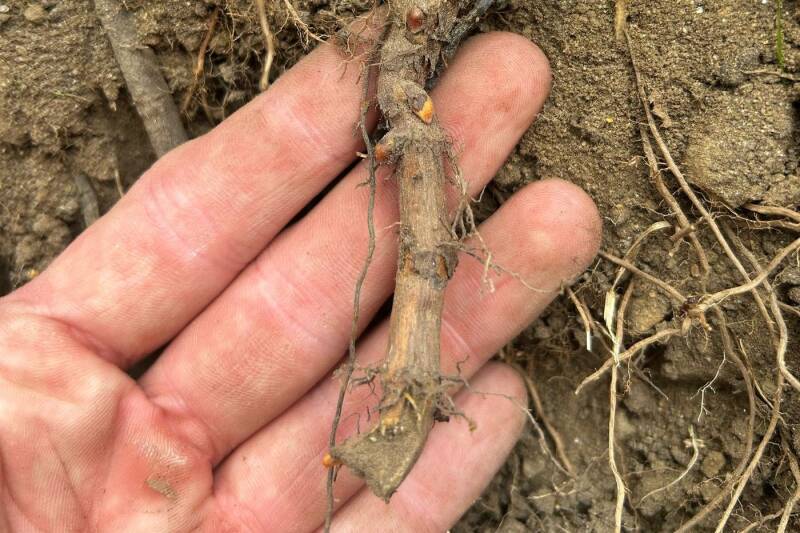
Knotweed spreads through rhizomes. When snapped, a fresh rhizome is typically orange or yellow inside. Even small fragments can regrow, which is why digging it out without a plan can make things worse.
Not sure it is Japanese knotweed? Giant, Bohemian and Himalayan knotweed look similar. See our other knotweeds page.
Not sure what you are dealing with? Send us a photo for a free ID, or book a free in-person survey. Book a free survey · WhatsApp us
Plants that are often mistaken for Japanese knotweed
- Bamboo: also has cane-like stems, but bamboo leaves are long and narrow, not shield-shaped (see bamboo or Japanese knotweed?)
- Russian vine (mile-a-minute): a climber with similar leaves and white flowers
- Himalayan balsam: also hollow-stemmed, but with pink flowers and narrow, serrated leaves (see our Himalayan balsam guide)
- Dogwood and lilac: similar leaf shapes but woody stems
Think you have knotweed? What to do next
- Do not cut, strim or dig it. Fragments can spread it further
- Do not put it in your garden waste bin or compost heap
- Take photos of the stems, leaves and the whole stand
- Get it identified and surveyed professionally
It is an offence under the Wildlife and Countryside Act 1981 to plant Japanese knotweed or otherwise cause it to grow in the wild, and knotweed waste must be handled as controlled waste. Our Japanese knotweed service covers treatment, stem injection and excavation. See treatment vs excavation for the options.
Frequently asked questions
What does Japanese knotweed look like in winter?
Dry, brown, hollow canes, often still standing. The rhizomes underground are alive and will regrow in spring.
Can I identify knotweed from a photo?
Often, yes. Send photos of the stems and leaves through our enquiry form or WhatsApp and we will identify it for free.
Is it illegal to have Japanese knotweed in my garden?
Having it is not in itself an offence, but it is an offence to plant it or cause it to grow in the wild, and the waste must be disposed of correctly. You may also need to declare it when selling.
Should I dig it out myself?
We advise against it. Fragments of rhizome can regrow, and the waste is controlled waste that must go to a suitably licensed site.
Related articles
- Japanese knotweed: herbicide treatment vs excavation
- Japanese knotweed and selling a house: management plans, guarantees and mortgages
- Himalayan balsam: how to identify and remove it
Send us a photo for a free opinion
Not sure what is growing in your garden? Send us a photo and we will tell you what it is and what we would recommend, free and with no obligation. Or book a free in-person survey with a written report and a fixed price quotation.