

Bamboo · 6 min read
Bamboo crossing a garden fence is one of the more common neighbour problems we see across Surrey and the rest of the South East. It rarely begins with a wall of canes overnight. More often, a few shoots appear along a boundary, or someone moves in and realises the plant has already crossed.
This guide is for both sides of the fence: if your neighbour's bamboo is coming into your garden, and if you are the one whose bamboo is spreading the other way. If growth is already on your side and you want practical, step-by-step advice, start with Your neighbour's bamboo is coming into your garden: what can you do?. Here we look at how these disputes start, why rented homes often get stuck, and what usually helps before the situation becomes harder to resolve.

Yellow-cane bamboo in a South East garden. Stands like this are a common starting point for boundary disputes.
Why these disputes often start so late
Many people do not realise there is a problem until they move in, or until a neighbour flags it. Bamboo spreads by rhizomes, which travel under fences, lawns, paths and gravel. A stand that still looks tidy on one side of a panel can already be well established out of sight on the other.
That is why a small crossing is worth taking seriously. Even a single rhizome at the base of a fence post, or a handful of thin canes on the far side, shows that the plant can spread. Later growth is usually much worse: thicker rhizomes, more canes, and a larger job for everyone involved. Cutting the shoots off at ground level does not change this, because the rhizomes stay alive underneath.
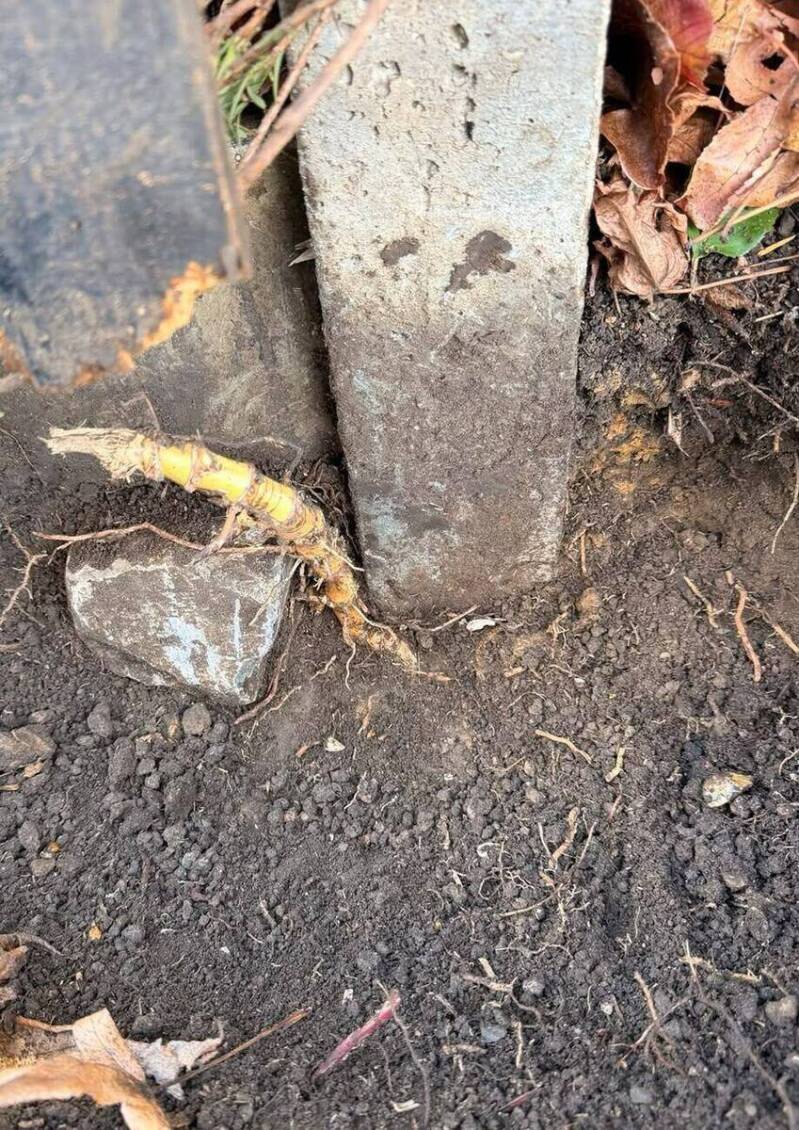
If your neighbour's bamboo is coming into your garden
It is frustrating, especially if you did not plant it. In our experience, most neighbours do not realise their bamboo has crossed. A calm conversation, with dated photos, is usually the best first step.
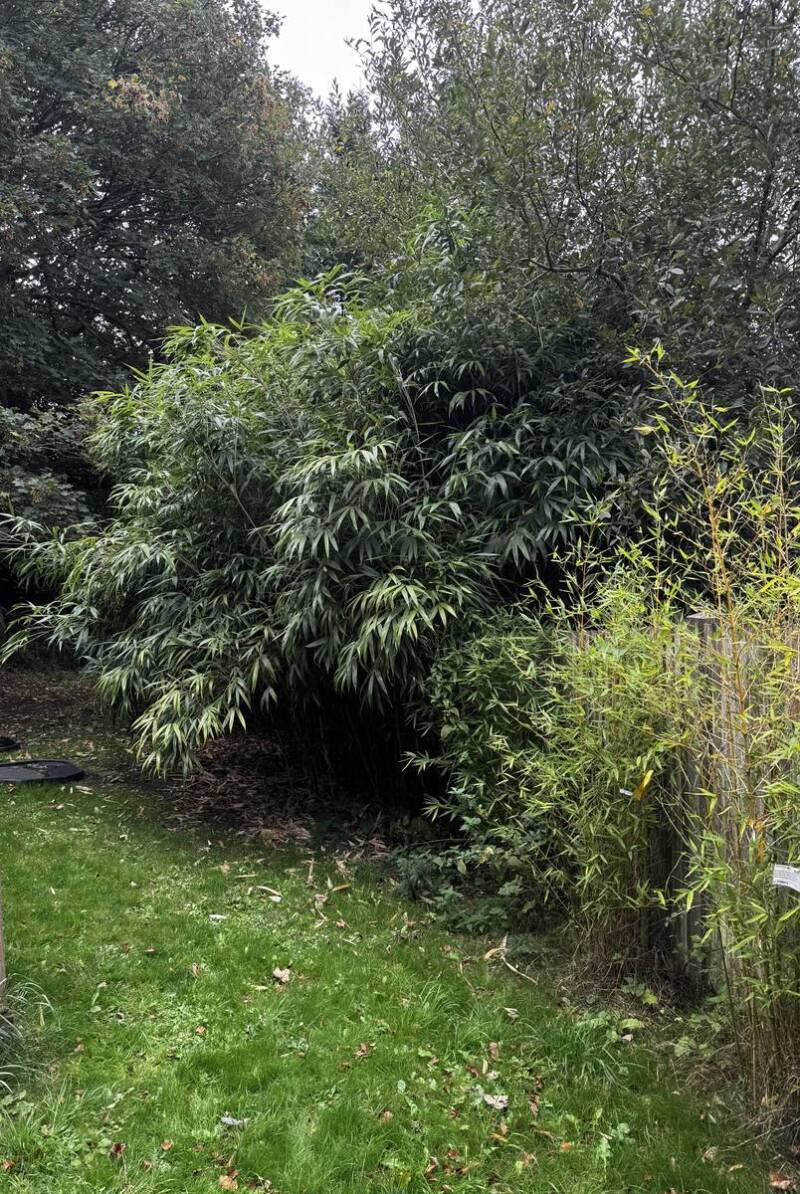
Keep a simple record of what you can see and when: shoots on your side, any damage to paving, lawns or fences, and where the main stand sits. You can deal with growth on your own property, but cutting canes at ground level will not stop it coming back. The lasting work is removing the rhizomes and protecting the boundary.
For the practical steps — confirming what it is, recording what you can see, talking to your neighbour and choosing a fix that lasts — see our guide Your neighbour's bamboo is coming into your garden: what can you do?. If you would like a written report with photos to share, we can include that as part of a free site survey.
If your bamboo is spreading into a neighbour's garden
You may only find out when a neighbour raises it, particularly if the canes still look contained on your side. That conversation is often not meant as a confrontation. It is usually someone noticing new shoots and wanting the problem dealt with before it grows.
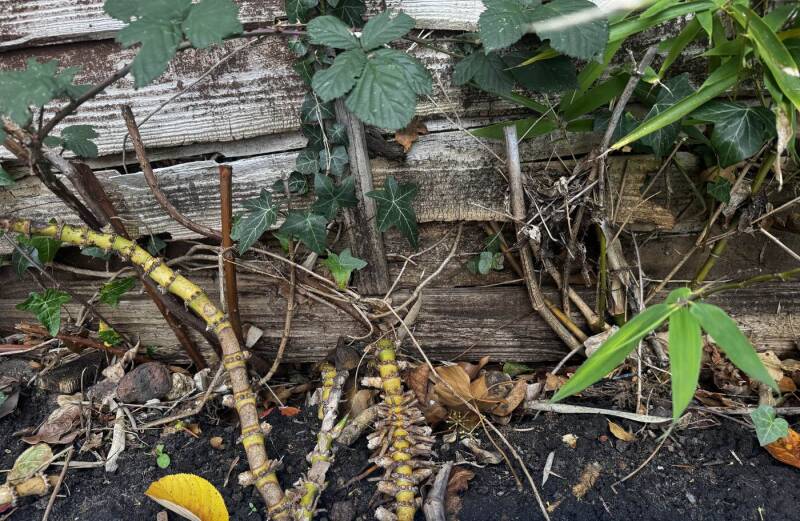
It is worth looking promptly, even if only a few canes have appeared. Acting early typically means a smaller job, a simpler fix and a better relationship over the fence. Offer to walk the boundary together, and consider booking a free site survey and quote so you both have a clear picture of what is in the ground.
A lasting approach is usually to remove the source stand and the spread, and, where it is needed, to install a root barrier along the boundary. Where both sides agree, we can work on both gardens in one job. Leaving a small crossing in the hope that it stays small is how these problems grow.
Tenanted properties tend to get ignored
Rented homes are the ones that most often sit untouched. Landlords can assume the tenant will keep the garden in hand. Tenants can assume the plant, and the cost of dealing with it, sit with the landlord or the managing agent. Meanwhile the rhizomes keep moving.
If you rent, check your tenancy agreement and tell the landlord or agent as soon as you notice spread, with dated photos. Do not assume someone else has already seen it.
If you let a property, do not wait for the next inspection, a change of tenant, or a complaint from the neighbour. A survey now is usually simpler than a dispute later. A written report with photos helps landlords, tenants, agents and neighbours talk from the same facts.
What usually helps, without turning it into a legal fight
Talk first, and keep it practical: what is growing, where it is, and what you would like to happen. Dated photos and a short note of when shoots appeared are useful if the conversation takes time, or if a managing agent becomes involved.
If talking stalls, a mediation service can help you find a way forward without immediately turning the problem into a formal dispute. If it does escalate, or if there is damage, get independent advice from a solicitor or your insurer before taking further steps.
We can provide a survey report with photos, but we are not lawyers, and this article is not legal advice. Bamboo is not treated in law in the same way as Japanese knotweed. There is a short general note on that in Your neighbour's bamboo is coming into your garden: what can you do?.
Lasting fixes, not a quick cut
Cutting bamboo to the ground will not end the problem. A lasting job usually means removing the rhizomes, not just the canes, and often installing a root barrier along the fence line so new growth cannot cross again. After the work, the ground should be watched for new shoots.
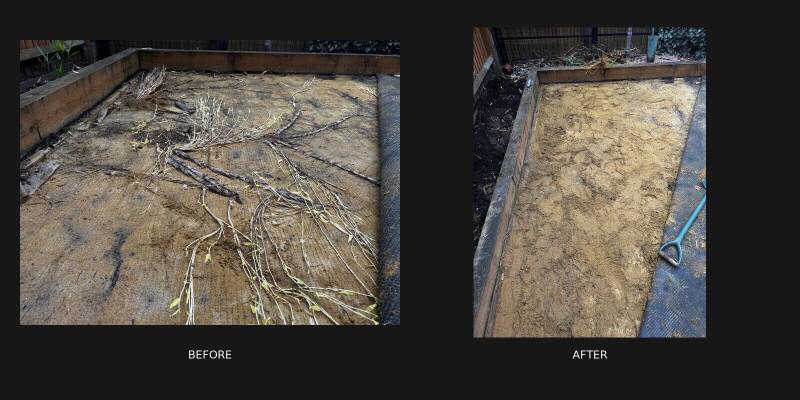
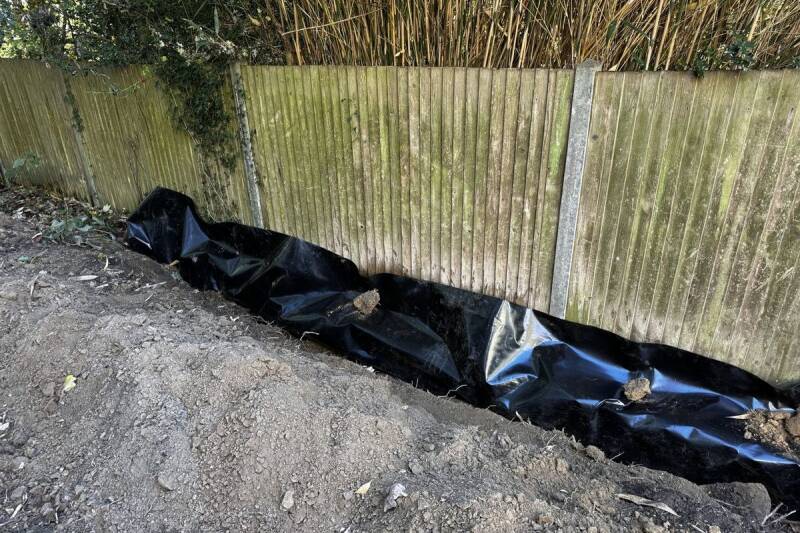
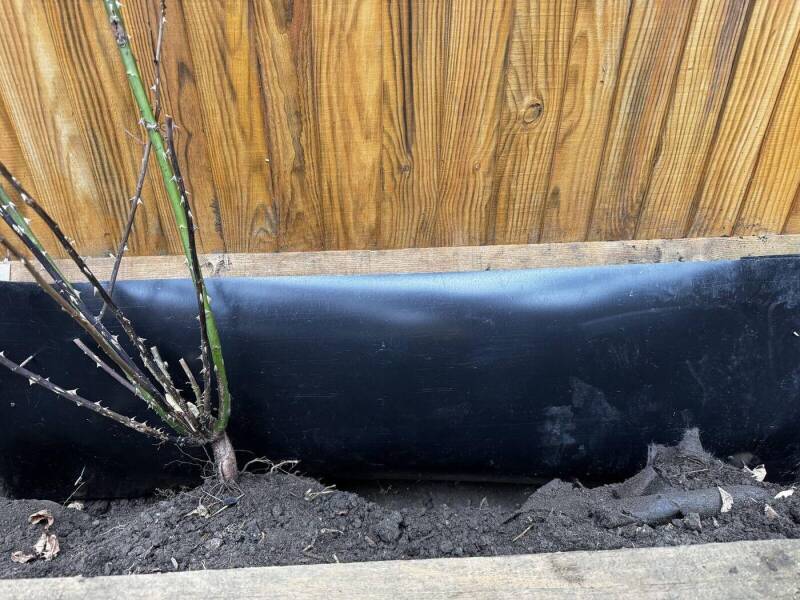
You can read more about bamboo removal and about running and clumping types, and when a root barrier is needed.
We offer a free site survey and quote across Surrey and the South East, with a written report and a fixed price. Book through our Contact us form, or WhatsApp us a photo. We are fully insured.
Book a free surveyWhatsApp us a photo
Frequently asked questions
We've only got a few shoots on the other side of the fence. Does it matter?
Yes. Even minor spread shows the plant can travel, and later growth will be much worse. It is much easier to deal with a few rhizomes now than a well-established crossing later.
We rent, or we let the property. Who should deal with it?
Check the tenancy agreement, and do not assume the other party will handle it. Tenants should tell the landlord or managing agent promptly, with photos. Landlords should not wait for a complaint. A free survey gives everyone a clear record of what is there.
Should I speak to my neighbour first?
Yes. A calm, early conversation is usually the best starting point, whether the bamboo is coming in or going out. Photos help keep the discussion factual.
Can Alien Plant Control work on both sides of the boundary?
Only where the neighbour gives permission. Many jobs are agreed jointly: removing the source and the spread, and installing a barrier along the boundary, in one go.
What should I record before anything is removed?
Take dated photos of shoots, of any damage, and of where the main stand sits. A short written note of when you first noticed the spread is useful. Our free site survey includes a written report with photos if you would like a clearer record to share.
Ready for a clear picture?
Send us a photo, or book a free site survey and quote. There is no obligation, and you will get a written report and a fixed price.